Old Maid rules
Old Maid is a card game for 2 or more players that young children can play. One queen is taken out of the deck, so one of the other queens has no partner. Players pair off their cards and draw from each other’s hands. Whoever is left holding the odd queen loses.
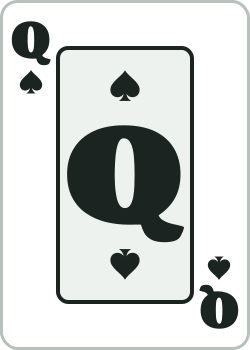
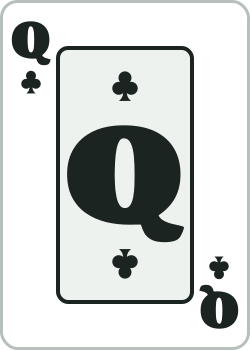
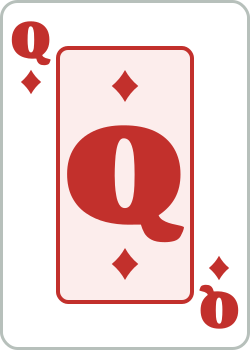
- Players
- 2 or more. One deck is enough for up to 6.
- You need
- A standard 52-card deck with one queen taken out, or a special Old Maid deck
- Deal
- All 51 cards, one at a time. Some players may get 1 more card than others.
- Goal
- Get rid of your cards in pairs, and do not get stuck with the odd queen
- Game ends
- When every card is paired except one queen. Whoever holds it is the old maid and loses.
- Playing time
- About 10 minutes
Quick start
- Take any one queen out of a standard deck. That leaves 51 cards, and one of the 3 queens left will have no partner.
- Deal all the cards face down, one at a time. Some players may get 1 more card than others. That is fine.
- Look at your cards. Lay every pair face down on the table. A pair is two cards of the same rank, such as two 7s. With three of a kind, lay down two.
- The dealer goes first. They fan their cards face down and hold them out to the player on their left. That player draws 1 card without seeing it.
- If the drawn card makes a pair, that player lays the pair down. Then they offer their cards to the player on their left. A player with no cards left is safe.
- Play until every card is paired except one queen. The player holding it is the old maid and loses.
Rule sheet and score sheet
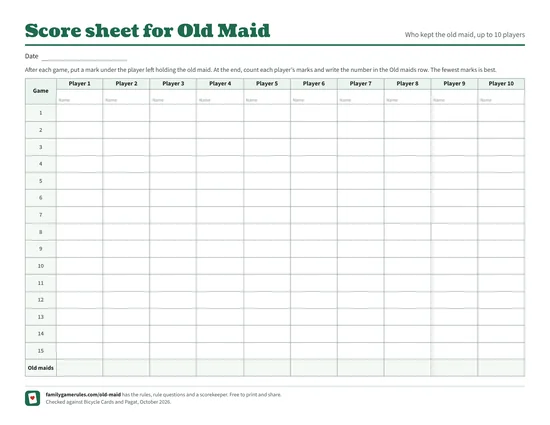
Print the whole game on one page, and a score sheet made for Old Maid. Both are free PDFs for Letter paper.
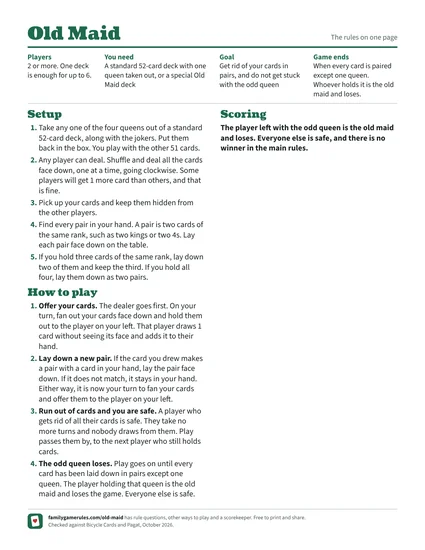
Setup
2 or more players, each playing alone. One deck is enough for up to 6. With more than 6, shuffle two decks together.
You need: A standard 52-card deck with one queen and the jokers taken out.
| In the set | Count |
|---|---|
| Number cards, 2 through 10 | 36 |
| Jacks | 4 |
| Queens | 3 |
| Kings | 4 |
| Aces | 4 |
| Total | 51 |
- Any one of the four queens can come out. Put it back in the box. It is not used.
- With 3 queens left, two can pair up and one cannot. That one is the odd queen. Which queen ends up alone depends on how the cards fall.
- Decks made for Old Maid have cards in matching pairs and one Old Maid card with no partner. The rules are the same.
- Take any one of the four queens out of a standard 52-card deck, along with the jokers. Put them back in the box. You play with the other 51 cards.
- Any player can deal. Shuffle and deal all the cards face down, one at a time, going clockwise. Some players will get 1 more card than others, and that is fine.
- Pick up your cards and keep them hidden from the other players.
- Find every pair in your hand. A pair is two cards of the same rank, such as two kings or two 4s. Lay each pair face down on the table.
- If you hold three cards of the same rank, lay down two of them and keep the third. If you hold all four, lay them down as two pairs.
| Players | Each player gets | Notes |
|---|---|---|
| 2 | 25 cards | 1 player gets 26. |
| 3 | 17 cards | Everyone gets the same number. |
| 4 | 12 cards | 3 of the 4 players get 13. |
| 5 | 10 cards | 1 player gets 11. |
| 6 | 8 cards | 3 of the 6 players get 9. |
Your cards after the deal
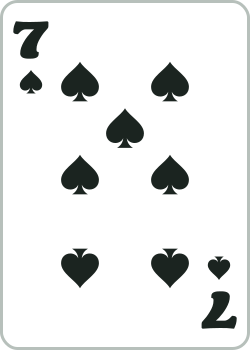
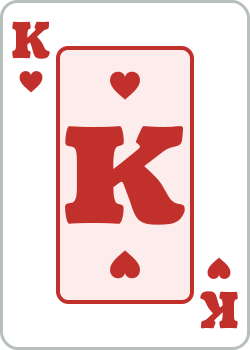
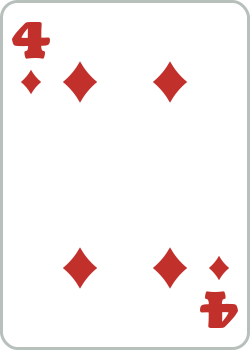
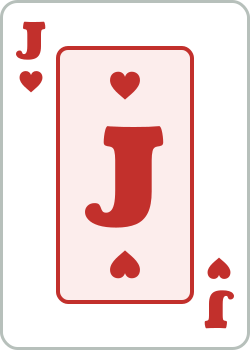
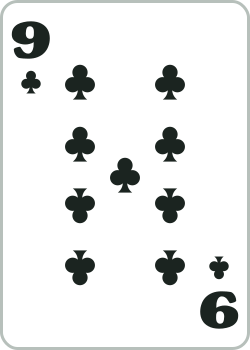
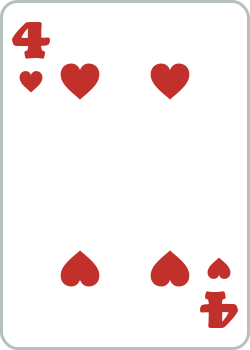
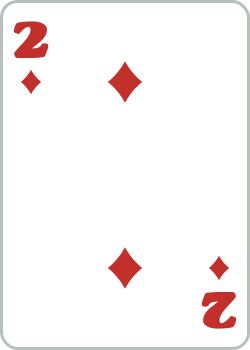
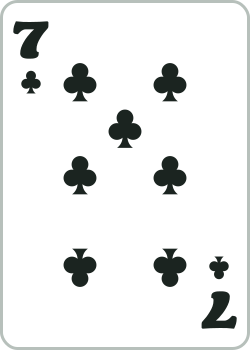
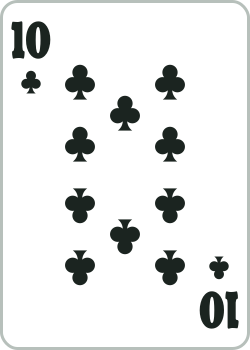
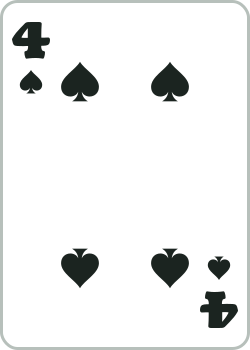
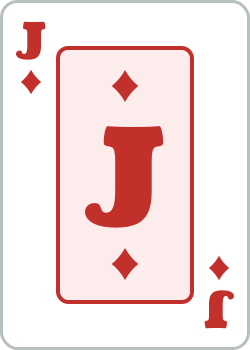
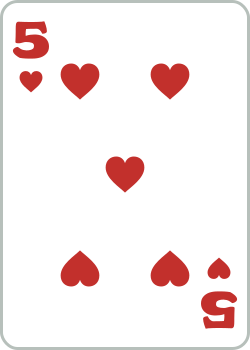
13 cards
Pairs you lay down
Shown face up here. Lay them face down.
Cards you keep
7 cards, no two of the same rank
How to play
Play goes clockwise, to the left. On each turn one player draws a card from the hand of the player on their right.
-
Offer your cards
The dealer goes first. On your turn, fan out your cards face down and hold them out to the player on your left. That player draws 1 card without seeing its face and adds it to their hand.
- You never draw from the player on your left. You offer your cards to that player and draw from the player on your right when they offer theirs to you.
- Any card can be drawn, including the odd queen. Keep a straight face so nobody can tell where it is.
-
Lay down a new pair
If the card you drew makes a pair with a card in your hand, lay the pair face down. If it does not match, it stays in your hand. Either way, it is now your turn to fan your cards and offer them to the player on your left.
- After the opening pairs go down, nobody holds two cards of the same rank. So a drawn card makes one pair at most.
- Laying down two cards that are not a pair is a mistake. The player who made it loses and is the old maid. It shows at the end, when 3 unpaired cards are left instead of 1.
-
Run out of cards and you are safe
A player who gets rid of all their cards is safe. They take no more turns and nobody draws from them. Play passes them by, to the next player who still holds cards.
- You can run out by laying down your last pair, or when someone draws your last card.
- If you run out on your own turn, the turn passes to the next player on your left who still has cards. That player offers their cards to their left as usual.
-
The odd queen loses
Play goes on until every card has been laid down in pairs except one queen. The player holding that queen is the old maid and loses the game. Everyone else is safe.
- The main rules name no winner, only a loser. Two variants further down do name a winner.
Example: drawing a card that makes a pair
You kept 7 cards after laying down your opening pairs, and one of them is the 9 of clubs. The player on your right fans their cards face down and holds them out to you. You draw one, and it is the 9 of spades. It matches your 9 of clubs, so you lay the two 9s face down. You now hold 6 cards. Fan them face down and offer them to the player on your left. A card that did not match would have stayed in your hand.
Your hand before the draw
You draw from the player on your right
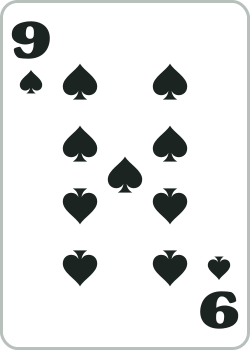
It matches your 9 of clubs
The pair you lay down
Your hand after the draw
6 cards. Now offer them to the player on your left.
Scoring
Old Maid has no points. Each game ends with one loser, the player left holding the odd queen.
The player left with the odd queen is the old maid and loses. Everyone else is safe, and there is no winner in the main rules.
Nothing is written down during a game. To play a series, mark the old maid of each game on the score sheet. The player with the fewest marks at the end has done best.
Scorekeeper
Old Maid has no points. Tap a player’s button when they end a game holding the old maid. It counts those games for each player, and the fewest is best. It works in this browser, keeps the game if the page reloads, and needs no account.
Other ways to play
Old Maid for more than 6 players
Shuffle two standard decks together and take one queen out. The game is played the same way. With 8 queens in two decks, taking one out leaves 7. Six of them pair up, and one is still the odd queen.
House rules and other versions
- Pairs must match in color
- A pair must be two cards of the same rank and the same color: spades with clubs, or hearts with diamonds. The 7 of hearts and the 7 of spades are not a pair. With this rule the odd queen is the other queen of the color you took out.
- A joker as the old maid
- Keep all four queens and add 1 joker, for 53 cards. The joker has no partner, and whoever holds it at the end loses.
- Take out a card at random
- Keep all four queens in. Take one card out of the full deck without looking at it. The other 3 cards of that rank stay in, so one of them will have no partner. This makes it harder to tell which card is the odd one.
- A special Old Maid deck
- Decks sold for the game have cards in matching pairs and a single Old Maid card. Play the same way. Whoever holds the Old Maid card at the end loses.
- Black Peter, with a jack
- Where the game has a man’s name, such as Black Peter in Germany, a jack comes out instead of a queen, and the odd jack loses. Black Peter used an ordinary deck, often 32 cards, minus one black jack. Special packs of 31 or 37 cards have a Black Peter card. The loser gets a black mark drawn on the face with a burnt cork.
- The French game, with a jack
- Take out the jack of clubs. The jack of spades has no partner, and whoever holds it at the end loses. Pairs must be the same rank and the same color. Play goes the other way: you draw from the player on your left. This game is called Vieux Garçon or Le Pouilleux.
- The odd card wins
- Play exactly the same way, but the player left holding the odd queen at the end wins instead of losing.
- First one out wins
- In rules from 1831, three queens are taken out, so the single queen left is the old maid. The first player to get rid of all their cards wins. The others play on until one is left with the queen.
- King Escapes, from Turkey
- Take out three kings, leaving 49 cards and one odd king. Play goes the other way: offer your cards to the player on your right. Whoever ends with the king drops out, and you deal again until one player is left. Another way gives the king’s holder 1 penalty point. When someone reaches 5 points, the game ends and the fewest points wins.
Rule questions
Which queen do you take out in Old Maid?
Any one of the four. The main rules do not name a suit, and the game works the same with any of them. A version called Scabby Queen, recorded in Scotland, takes out the queen of clubs.
Do pairs have to be the same color?
No, not in the main rules. Any two cards of the same rank make a pair, such as the 7 of hearts and the 7 of spades. Some rules also require a pair to match in color, spades with clubs and hearts with diamonds. Agree before you deal.
What do you do with three of a kind?
Lay down two of them as a pair and keep the third in your hand. If you are dealt all four of a rank, lay them down as two pairs.
Who goes first in Old Maid?
The dealer. The dealer fans their cards face down and offers them to the player on their left, who draws first. Some rules start one seat later, with the player on the dealer’s left offering first.
Do all players get the same number of cards?
No, and it does not matter. All 51 cards are dealt, one at a time, so some players often get 1 more card than others. With 3 players everyone gets 17.
What happens when you run out of cards?
You are safe. You take no more turns, and nobody draws from you. Play carries on around you until only the odd queen is left.
Can you look at the cards before you draw one?
No. The player offering their cards holds them face down, and you pick one without seeing its face.
Is there a winner in Old Maid?
Not in the main rules. The game finds a loser, the player left holding the odd queen, and everyone else is safe. Some groups play the other way round, so the odd queen wins. In old rules from 1831, the first player out of cards wins.
What if someone lays down two cards that are not a pair?
The player who made the mistake loses. A wrong pair shows up at the end, when 3 unpaired cards are left instead of 1. The player who laid down the wrong pair becomes the old maid.
How many people can play Old Maid?
2 or more. One deck is enough for up to 6 players. With more than 6, shuffle two decks together and take out one queen.
Can you play Old Maid with a joker?
Yes. Keep all four queens and add 1 joker. The joker is the card with no partner, and whoever holds it at the end loses.
Words used in Old Maid
- Rank
- The number or letter on a card: ace, 2 through 10, jack, queen or king.
- Pair
- Two cards of the same rank, such as two 7s or two kings. In some groups they must also be the same color.
- Odd queen
- The one queen left without a partner, because a queen was taken out before the deal.
- Old maid
- The odd queen, and also the name for the player left holding it at the end. That player loses.
- Fan
- To spread your cards out face down so the next player can draw one.
- Safe
- Out of cards and out of danger. A safe player takes no more turns.
What you need
- A standard deck of playing cardsOne 52-card deck is enough for up to 6 players. You use 51 of the cards.Find it on Amazon (A standard deck of playing cards, opens in a new tab)
- An Old Maid deck for childrenOptional. Cards in matching pairs plus one Old Maid card. The rules are the same.Find it on Amazon (An Old Maid deck for children, opens in a new tab)
- A playing card holderOptional. It holds the cards for a child whose hands are too small to fan them.Find it on Amazon (A playing card holder, opens in a new tab)
As an Amazon Associate, we earn from qualifying purchases. How the site is paid for.
Checked against
These rules are written in our own words from Bicycle Cards and checked against Pagat. Sources last checked on October 12, 2026.
- First source: Bicycle Cards, Old Maid. The 51-card deck with one queen out, the deal one at a time with unequal hands, pairs laid face down, three of a kind, offering to the left, the odd queen losing, a wrong pair, and special decks using the same rules.
- Second source: Pagat, Old Maid. 2 or more players, a pair as two cards of equal rank, clockwise play starting with the dealer, drawing without seeing the card, a player out of cards being safe, and the jack, odd-card-wins, special-pack, Black Peter and Turkish variants.
Other sources we used (2)
- Wikipedia, Old maid (card game). Four of a kind as two pairs, two decks for more than 6 players, the same-color rule, the joker, a card taken out at random, the 1831 rules with a winner, Scabby Queen’s queen of clubs, and a start one seat later.
- Wikipedia, Vieux garçon. The French game: the jack of clubs taken out, the jack of spades as the odd card, and pairs that must match in color.
Where the sources differ (10)
| Topic | Bicycle Cards | Pagat | This page |
|---|---|---|---|
| Number of players | 2, 3, 4 or 5 and more. | 2 or more. | 2 or more. One deck for up to 6 and two decks for more than 6, from Wikipedia, which gives 2 to 12. |
| Which queen comes out | One of the four queens. No suit named. | One queen. No suit named. | Any one queen. Wikipedia gives the queen of hearts as an example, and its Scabby Queen takes out the queen of clubs, which is in a rule question. |
| What makes a pair | Not defined in words. Pairing by rank is implied. | Two cards of equal rank. Color is not mentioned. | Any two cards of the same rank. Wikipedia’s modern rules require matching colors too, marked as needing a citation, and the French game does the same. Matching colors is a variant and a rule question. |
| Three and four of a kind | With three of a kind, take out only two. Four is not covered. | Not stated. | Follows Bicycle for three. Four of a kind as two pairs comes from Wikipedia. |
| How pairs are laid down | Face down. | Discarded. Face up or face down is not stated. | Face down, following Bicycle. |
| A player who runs out of cards | Not stated. | The player is safe and takes no further part. The turn passes to the next player on the left. | Follows Pagat. |
| Laying down a wrong pair | A player found to have laid down two cards that are not a pair loses and becomes the old maid. It shows at the end as three unpaired cards instead of one. | Not stated. | Follows Bicycle. |
| Who starts | The dealer offers their hand to the player on the left, who draws first. | The dealer begins by offering cards to the left. | The dealer. Wikipedia has the player on the dealer’s left offer first, which is mentioned in a rule question. |
| A winner | None named. Only the loser. | None named in the main game. A variation makes the holder of the odd card the winner. | No winner in the main rules. Pagat’s odd-card-wins variation and Wikipedia’s 1831 first-out-wins rule are variants. |
| Variations | Only special decks, played by the same rules. | A jack instead of a queen where the game has a man’s name, the odd card winning, a special pack, Black Peter with its 31 or 37 card packs and the cork mark, and the Turkish Papaz Kaçtı. | All of these are variants. The joker, a random card, matching colors, the 1831 rules and the French jack of clubs come from the extra sources. |
What on this page is our own
- The playing time of about 10 minutes is our estimate.
- The example draw, the dealt hand in the setup diagram and the pieces pictured at the top of the page are our own.
- The number of cards each player gets for 2 to 6 players is our arithmetic from dealing 51 cards one at a time.
- That one of the 3 queens left cannot pair, that a drawn card can make at most one pair after the opening pairs, that the odd queen under the color rule is the other queen of the color taken out, and the 7 queens in a two-deck game are our arithmetic.
- That play skips a player who is out, and how the turn passes when a player runs out on their own turn, are our reading of Pagat’s rule that the turn passes to the next player on the left.
- Taking out the jokers, keeping your cards hidden, and keeping a straight face are our additions. The sources do not mention them.
- Marking the old maid of each game on a score sheet, with the fewest marks best, is our suggestion for playing a series. No source scores the main game.
- For more than 6 players, Wikipedia says only that two packs are used. Taking out one queen from the two decks together is our reading of its rule to remove one card.
- The notes under What you need describe products and are not rules.
- In the joker and random-card variants, keeping all four queens in is our reading. Wikipedia says only that a joker is added, or that one card is taken out at random.
Spotted a mistake? Email contact@familygamerules.com and we'll check it against the sources.