Poker hand rankings
A poker hand is 5 cards, and there are 9 kinds of hand. This page lists them from best to worst, with a drawn example of each, the chance of being dealt each one and the rules for ties. A printable one-page chart is included.
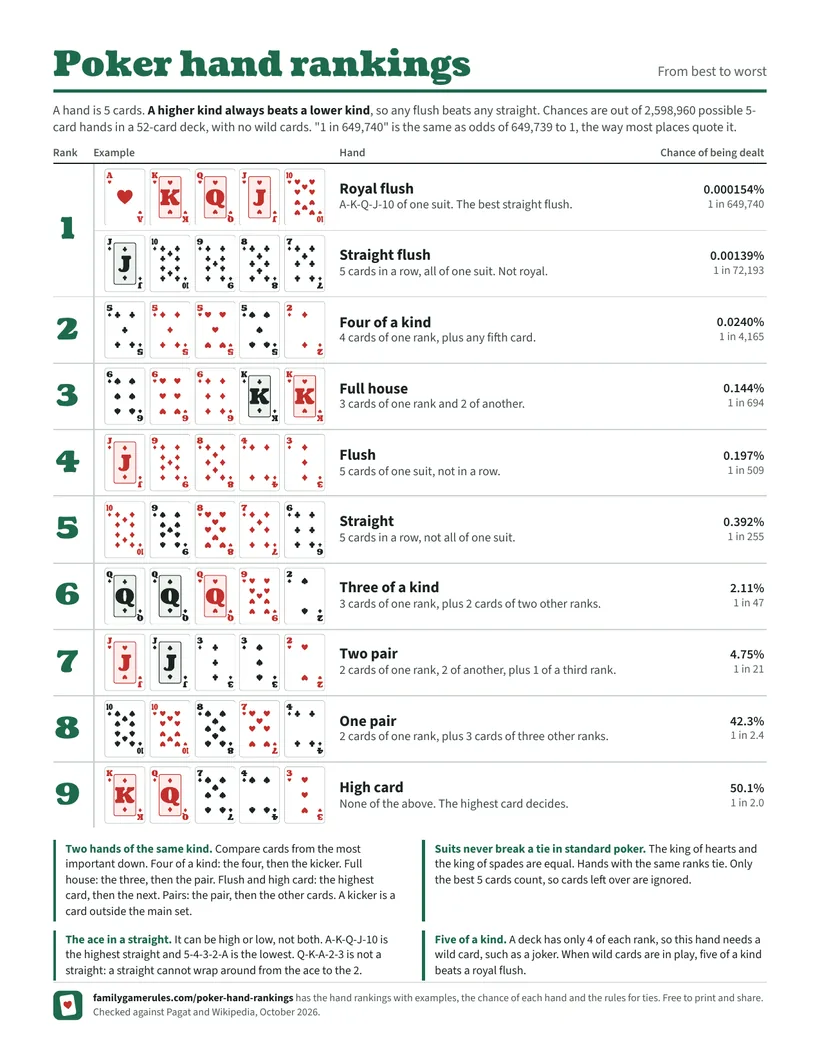
Poker hands from best to worst
A higher kind of hand always beats a lower kind, so any flush beats any straight and any three of a kind beats any two pair. The cards of the hands only matter when both hands are the same kind. This list is for a standard 52-card deck with no wild cards. Only the 5 cards in the hand count, so any other cards a player holds are ignored.
| Rank | Hand | What it is |
|---|---|---|
| 1 | Straight flush | 5 cards in a row, all of one suit. The highest one, ace to 10, is called a royal flush. |
| 2 | Four of a kind | 4 cards of one rank, plus any fifth card. |
| 3 | Full house | 3 cards of one rank and 2 cards of another rank. |
| 4 | Flush | 5 cards of one suit that are not in a row. |
| 5 | Straight | 5 cards in a row that are not all of one suit. |
| 6 | Three of a kind | 3 cards of one rank, plus 2 cards of two other ranks. |
| 7 | Two pair | 2 cards of one rank, 2 cards of another rank and 1 card of a third rank. |
| 8 | One pair | 2 cards of one rank, plus 3 cards of three other ranks. |
| 9 | High card | None of the above. The highest card decides. |
Royal flush
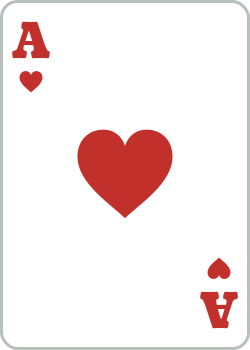
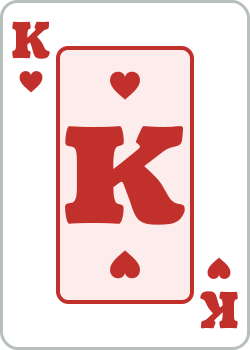
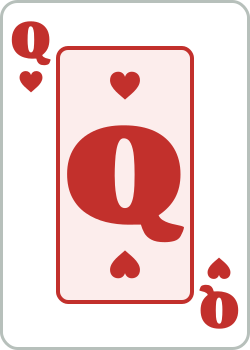
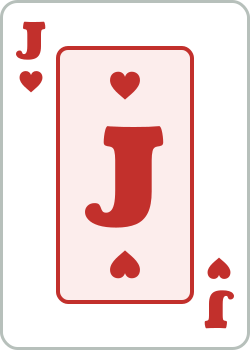
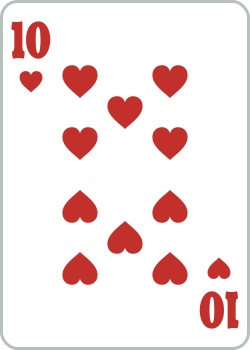
Ace-high straight flush
Straight flush
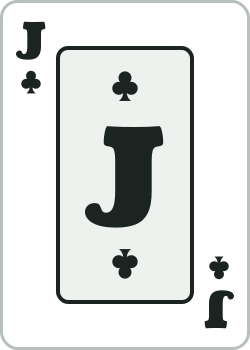
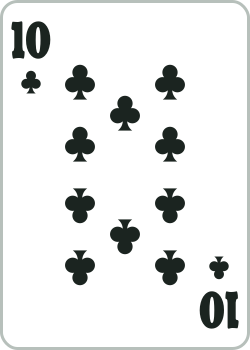
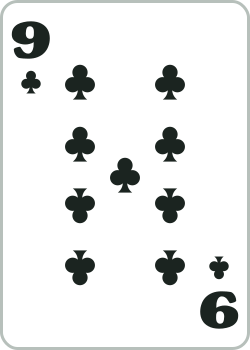
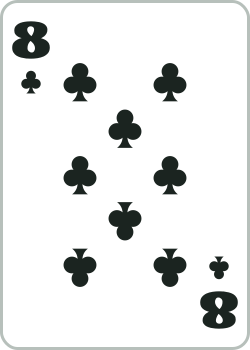
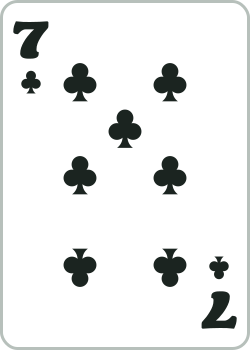
Jack-high, all clubs
Four of a kind
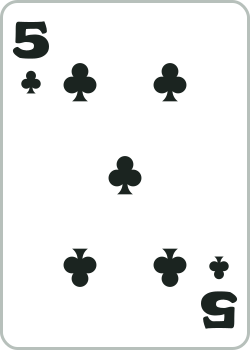
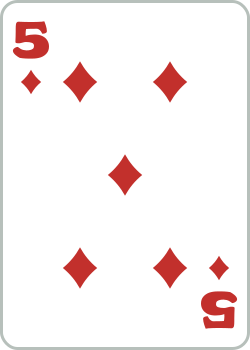
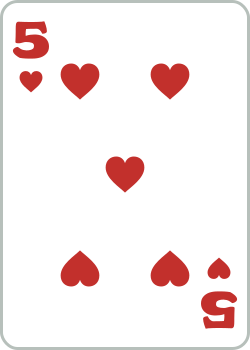
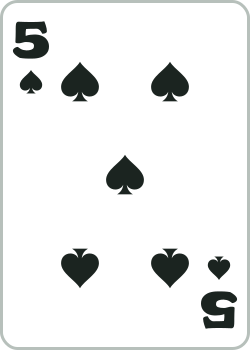
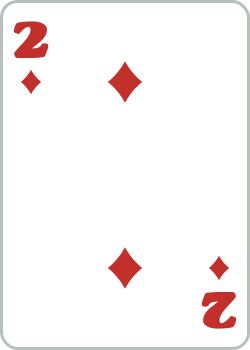
Four 5s and a 2
Full house
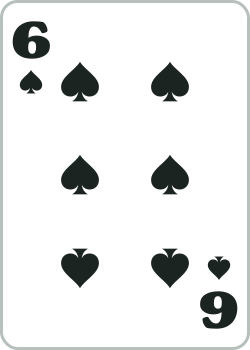
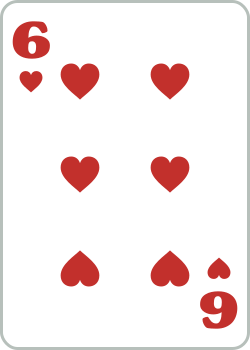
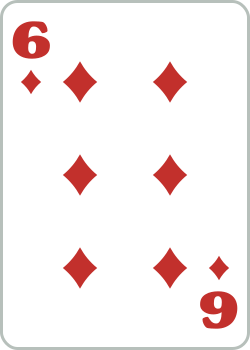
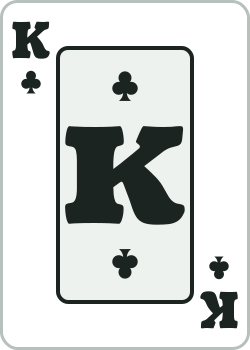
Three 6s and two kings
Flush
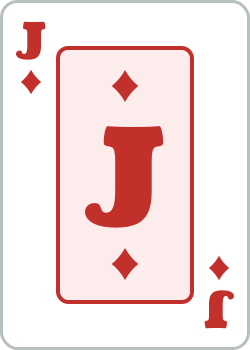
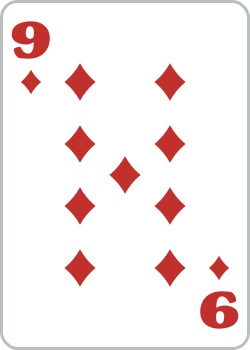
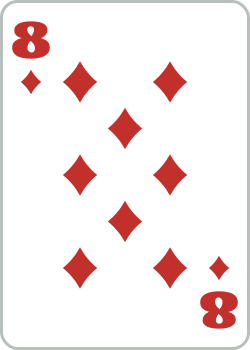
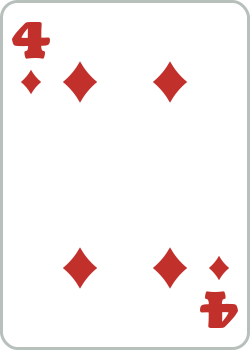
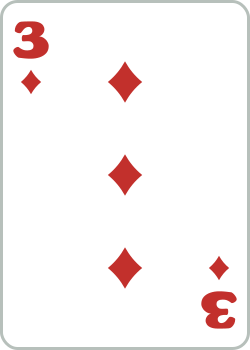
Five diamonds, not in a row
Straight
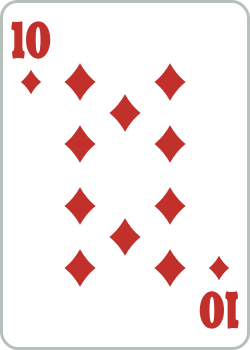
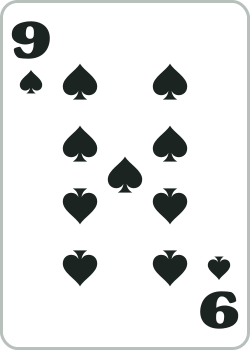
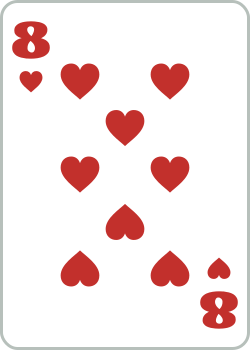
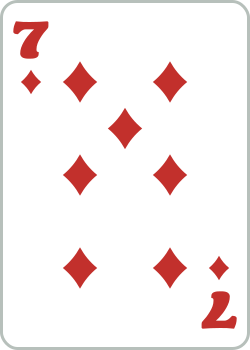
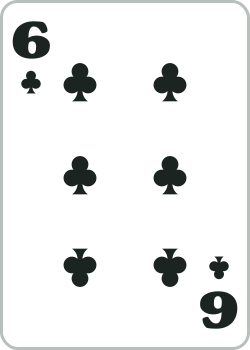
10 high, mixed suits
Three of a kind
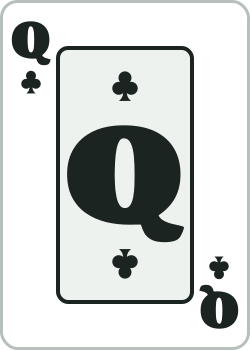
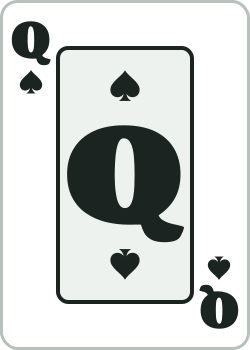
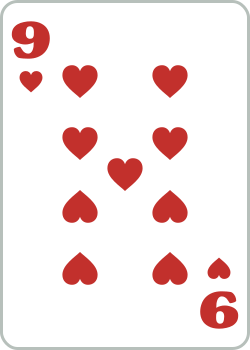
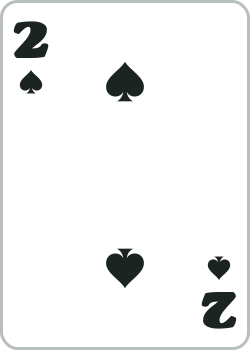
Three queens
Two pair
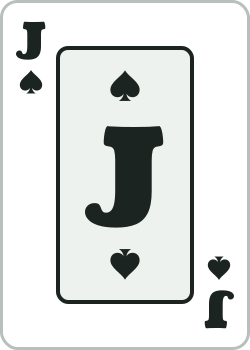
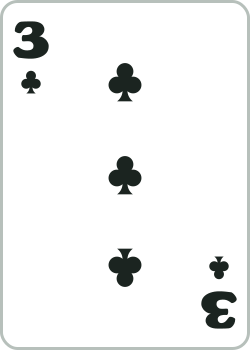
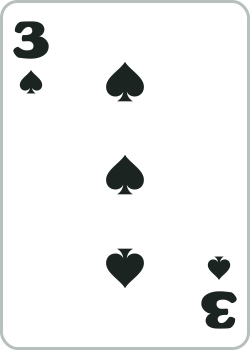
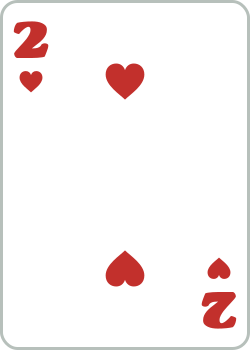
Jacks and 3s, with a 2
One pair
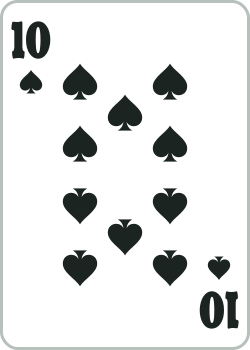
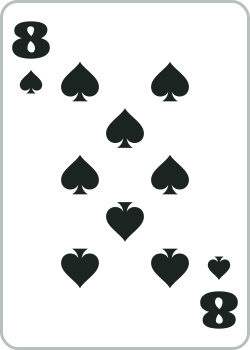
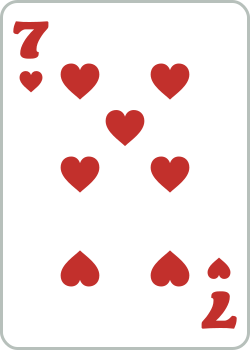
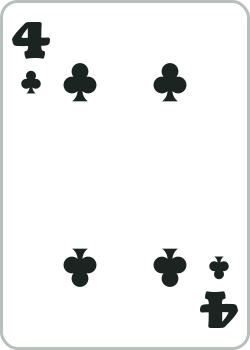
A pair of 10s
High card
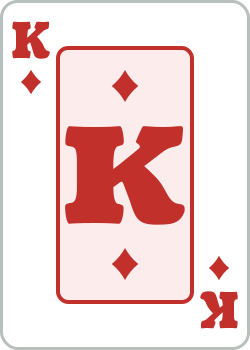
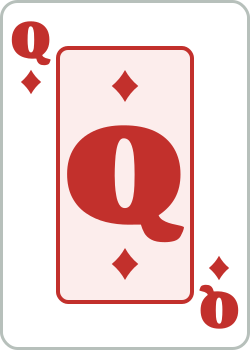
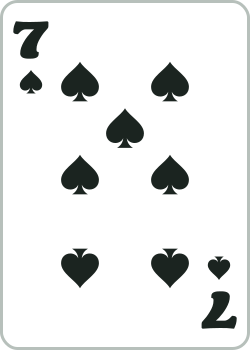
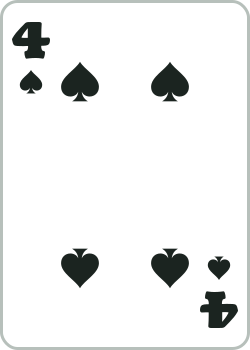
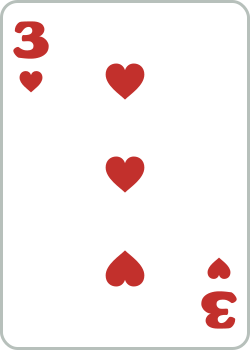
King high
Printable poker hand rankings chart
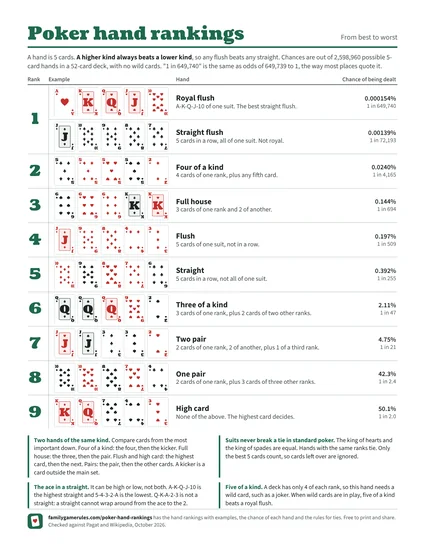
Poker hand rankings chart
One page for US Letter paper. It shows all 9 kinds of hand with a drawn example, the chance of each, and the rules for ties, kickers and the ace-low straight.
Download the PDFHow often each hand is dealt
A 5-card hand can be chosen from the 52 cards in 2,598,960 ways. The table counts how many of those hands are of each kind. Two hands that differ only in suit are counted separately, so there are 4 royal flushes, one in each suit.
Many other places write the same chance as “X to 1” instead of “1 in X”. The two say the same thing, with 1 taken off the first number: 1 in 649,740 is the same as 649,739 to 1.
| Hand | Number of hands | Chance of being dealt | About 1 in |
|---|---|---|---|
| Royal flush | 4 | 0.000154% | 649,740 |
| Straight flush (not royal) | 36 | 0.00139% | 72,193 |
| Four of a kind | 624 | 0.0240% | 4,165 |
| Full house | 3,744 | 0.144% | 694 |
| Flush (not a straight flush) | 5,108 | 0.197% | 509 |
| Straight (not a straight flush) | 10,200 | 0.392% | 255 |
| Three of a kind | 54,912 | 2.11% | 47 |
| Two pair | 123,552 | 4.75% | 21 |
| One pair | 1,098,240 | 42.3% | 2.4 |
| High card | 1,302,540 | 50.1% | 2.0 |
| All hands | 2,598,960 | 100% | 1 |
The rarer the hand, the higher it ranks. The straight flush row leaves out the royal flush, and the flush and straight rows leave out straight flushes, so no hand is counted twice. Together there are 40 straight flushes, royal flushes included. These counts are for a fresh 5-card deal with no wild cards. Games where you pick your best 5 from more cards have different chances.
Ties, kickers and suits
When two hands are the same kind, compare them card by card, starting with the cards that matter most. A kicker is a card in the hand that is not part of the main set, such as the fifth card beside four of a kind or the odd card beside a pair. Kickers break ties when the main sets are equal.
| Hand | Compare first | If those are equal |
|---|---|---|
| Straight flush | The top card of the row | The hands tie. |
| Four of a kind | The rank of the four cards | The kicker. |
| Full house | The rank of the three cards | The rank of the pair. |
| Flush | The highest card | The second highest, then the third, fourth and fifth. |
| Straight | The top card of the row | The hands tie. |
| Three of a kind | The rank of the three cards | The higher kicker, then the lower kicker. |
| Two pair | The higher pair | The lower pair, then the kicker. |
| One pair | The pair | The highest of the other 3 cards, then the next, then the last. |
| High card | The highest card | The second highest, then the third, fourth and fifth. |
- Four of a kind: 4-4-4-4-2 beats 3-3-3-3-A, because four 4s beat four 3s.
- Full house: 9-9-9-4-4 beats 8-8-8-A-A, because only the three cards are compared first.
- Flush: K-J-9-3-2 beats K-J-7-6-5, because the 9 beats the 7.
- Three of a kind: 5-5-5-3-2 beats 4-4-4-K-5, and 4-4-4-K-5 beats 4-4-4-Q-9.
- Two pair: J-J-2-2-4 beats 10-10-9-9-8, and Q-Q-5-5-8 beats Q-Q-5-5-4.
- One pair: 6-6-4-3-2 beats 5-5-A-K-Q, and J-J-A-9-3 beats J-J-A-8-7.
- High card: A-J-9-5-3 beats A-10-9-6-4, because the jack beats the 10.
Suits never break a tie in standard poker. The king of hearts and the king of spades are equal, so two hands with the same ranks tie even when their suits differ.
Because suits do not matter, the 2,598,960 possible hands come down to only 7,462 different strengths. Cards that are not part of the best 5 never count.
The ace in a straight
The ace can be the highest card or the lowest card in a straight, but not both at once. A-K-Q-J-10 is the highest straight. 5-4-3-2-A is the lowest, and it is a 5-high straight because the 5 is its top card. So 6-5-4-3-2 beats it.
A straight cannot wrap around the end of the deck. Q-K-A-2-3 is not a straight, because it goes past the ace and starts again at the 2. It is only a high card hand, ace high. The same rules apply to a straight flush.
A straight, ace low
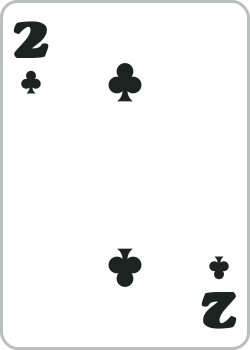
5-4-3-2-A, a 5-high straight
Not a straight
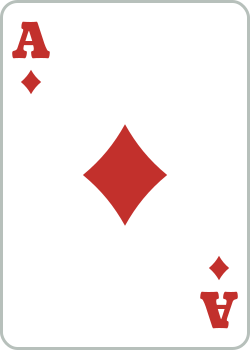
Q-K-A-2-3 wraps around
Five of a kind
A deck has only 4 cards of each rank, so five of a kind can exist only with a wild card. A wild card is a card, such as a joker, that stands in for any card you need. When wild cards are in play, five of a kind ranks above a royal flush, and five aces is the highest hand of all.
Five aces
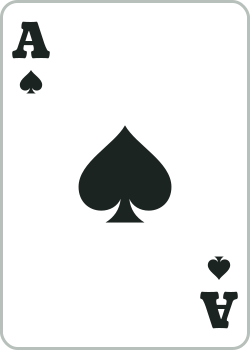
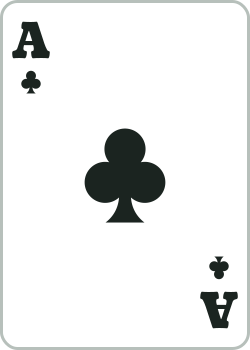
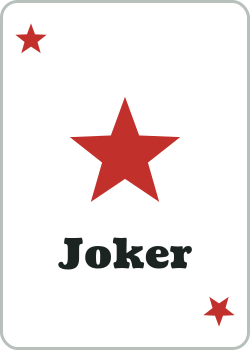
Needs a wild card
Questions
Does a flush beat a straight?
Yes. A flush ranks 4th and a straight ranks 5th. Any flush beats any straight, whatever the cards are. A flush is also the rarer hand, with 5,108 flushes against 10,200 straights, not counting straight flushes.
Does three of a kind beat two pair?
Yes. Three of a kind ranks 6th and two pair ranks 7th, so any three of a kind beats any two pair. Even three 2s beat two pairs of aces and kings.
What happens when two players have flushes?
Compare the highest card in each flush. The higher one wins. If those match, compare the second highest, then the third, fourth and fifth. If all 5 ranks match, the flushes tie, because suits do not break ties.
What if two players have the same pair?
Compare the other three cards, the kickers. Look at the highest kicker first, then the next, then the last. J-J-A-9-3 beats J-J-A-8-7 because the 9 beats the 8. If all the kickers match, the hands tie.
Do suits matter in poker hands?
Not for comparing hands. In standard poker no suit outranks another, so a pair of kings in hearts ties a pair of kings in spades with the same other cards. Suits matter only for making a flush.
Can the ace be low in a straight?
Yes. 5-4-3-2-A is a straight, and it is the lowest one. The ace cannot go both ways, so Q-K-A-2-3 is not a straight. A-K-Q-J-10 is the highest straight.
Does a full house beat a flush?
Yes. A full house ranks 3rd and a flush ranks 4th. Between two full houses, the higher three cards win, so 9-9-9-4-4 beats 8-8-8-A-A.
What is the best possible poker hand?
Without wild cards it is the royal flush: ace, king, queen, jack and 10 of one suit. Only 4 of the 2,598,960 hands are royal flushes. With wild cards, five aces beats it.
Checked against
The facts on this page are written in our own words from these sources. Sources last checked on October 12, 2026.
- Pagat, Ranking of Poker Hands. The order of the hand categories; how hands of the same category are compared, with the example pairs of hands; no ranking between suits; only five cards count; the ace low straight (wheel) and no wrapping around; five of a kind only with wild cards, above a royal flush.
- Wikipedia, List of poker hands. Nine categories with a 52-card deck; the example hands; kickers; how each category is ranked; hands that differ by suit alone are equal; 2,598,960 distinct hands and 7,462 distinct hand ranks; the ace cannot rank both high and low; five of a kind needs a wild card.
- Wikipedia, Poker probability. The number of 5-card hands of each kind, the probability of each, and the 4 royal flushes. It gives odds against (649,739 : 1 for a royal flush), not ‘1 in’.
- Pagat, Poker Hand Probabilities. Second check of the chance of each hand in a single deck, as percentages.
What on this page is our own
- The counts of 5-card hands of each kind (4, 36, 624, 3,744, 5,108, 10,200, 54,912, 123,552, 1,098,240 and 1,302,540) are in the Wikipedia table. tools/checks.py also recounts all 2,598,960 hands by enumeration, so they are checked by code and not only copied.
- The percentages are those counts divided by 2,598,960, rounded to 3 significant figures. The ‘About 1 in’ column is 2,598,960 divided by the count, rounded (to a whole number from 10 up, to 1 decimal below 10). Both are our own arithmetic. The sources print the same chances to more places. Wikipedia’s Poker probability prints odds against (for example 649,739 : 1 for a royal flush), so the ‘About 1 in’ column is our conversion: 1 in X is the same as X minus 1 to 1.
- The table splits the royal flush from other straight flushes because the sources do. 40 straight flushes in all is 4 + 36. The sources’ Pagat table gives 0.001539% for the two together.
- The ‘Distinct hands’ column in the Wikipedia table counts rank patterns, not hands (1, 9, 156 and so on). We use its ‘Frequency’ column for the number of hands.
- The page counts 9 kinds of hand and treats the royal flush as the highest straight flush, as the sources do. Five of a kind is covered only as a wild card hand.
- The drawn examples are ours, taken from the hands printed in the Wikipedia article where one fits. The 5-4-3-2-A and Q-K-A-2-3 hands are our own examples of the rules the sources state. Every example is classified by code in tools/checks.py.
- Each ‘beats’ pair in the ties list is from the Pagat page. A few are shortened to the part that decides. Each pair is compared by code in tools/checks.py.
- The kicker explanation is our wording of the sources’ use of the term. Pagat calls the fifth card beside four of a kind the kicker, and Wikipedia calls the odd cards of three of a kind, two pair and one pair kickers.
- This page explains hands only. It does not link to or mention betting or real-money play.
Spotted a mistake? Email contact@familygamerules.com and we'll check it against the sources.